Variational Autoencoders (VAEs) in Generative Music: A New Era of Creativity

Variational Autoencoders (VAEs) in Generative Music: A New Era of Creativity

VAEs can learn from existing pieces of music and then generate new compositions that maintain the style and structure of the originals. This technology is not just a tool for musicians and composers but a new partner in creativity, providing fresh ideas and pushing the boundaries of what is possible in music. Whether you are a professional musician, a hobbyist, or just someone curious about the intersection of AI and music, the world of VAEs offers a fascinating glimpse into the future of music creation. Join us as we explore how Variational Autoencoders (VAEs), their significance in generative models, and the profound impact they have on creativity in the music industry. By the end of this article, you'll gain a deeper understanding of how VAEs are reshaping music and inspiring a new era of creativity. Let's begin this exciting journey!"
A Closer Look at Generative Adversarial Networks (GANs)

A Closer Look at Generative Adversarial Networks (GANs)

Generative Adversarial Networks (GANs) have truly changed the game in artificial intelligence and deep learning since they were introduced by Ian Goodfellow in 2014. At their core, GANs involve two neural networks: a Generator and a Discriminator. These networks work together in a unique way to create new, synthetic data. In this article, we'll take a close look at GANs, starting with their basic structure and how they function. We’ll explore their various uses and the challenges they face. By the end, you’ll have a solid grasp of GANs and how they might transform different industries. Additionally, we can also explore the practical implementation of GANs using Python for image generation.
How to Implement Generative Models Using Machine Learning Principles

How to Implement Generative Models Using Machine Learning Principles

Generative models are a type of machine learning algorithms designed to generate new data samples that resemble a given dataset. They are powerful tools in artificial intelligence, enabling applications like image synthesis, text generation, and data augmentation. This section provides an overview of how to implement these models using core machine learning principles.
What is generative AI and how does it work?

What is generative AI and how does it work?

Generative AI is an exciting branch of artificial intelligence that can create new content from scratch. Imagine a system that can make images, write text, compose music, or even generate code based on what it has learned. Unlike traditional AI, which focuses on recognizing patterns and making predictions, generative AI goes a step further by generating original content. This technology has already made a significant impact in various fields. For example, it can be used to design stunning visuals, write engaging stories, or help developers by producing useful code snippets. Generative AI opens up a world of possibilities, from creating unique art to enhancing productivity in software development.
How to Construct Automated Knowledge Graph using LLMs

How to Construct Automated Knowledge Graph using LLMs

Data Collection: Collect data from company documents, news articles, and social media posts about the company’s products, key personnel, and partnerships. 2. Entity Extraction: Entity extraction means identifying and pulling out important pieces of information from text. These pieces are called entities, and they can be names of people, places, organizations, or other key objects. Let's look at a simple Python example to see how this works:
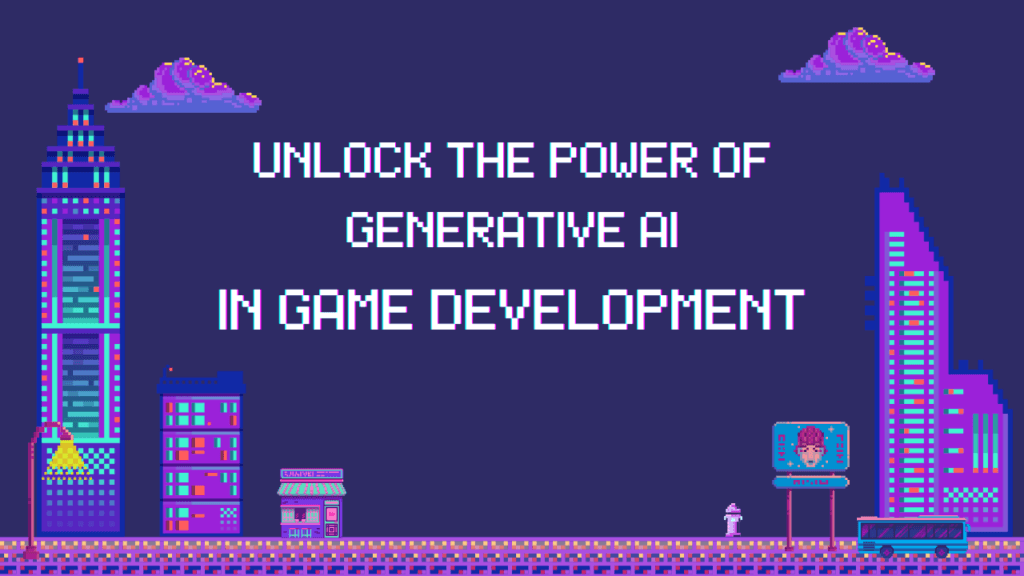
Unlock the Power of Generative AI in Game Development

Unlock the Power of Generative AI in Game Development

Generative AI creates new content by learning from existing data. In game development, it helps design levels, characters, stories, and more. This reduces the workload for developers and offers fresh and unique experiences for players. Generative AI in game development, such as AI character design and AI animation, enhances the creativity and adaptability of games, leading to more engaging and diverse gameplay.
How to Generate Synthetic Data using GenAI

How to Generate Synthetic Data using GenAI

Generating synthetic data with AI helps overcome challenges related to data scarcity and privacy. It allows researchers and developers to create large, high-quality datasets that are similar to real-world data. This improves the performance of machine learning models without the need for extensive data collection efforts.
How to Generate Images from Text Using Python

How to Generate Images from Text Using Python

In today's exciting tech world, creating images from text has completely transformed many areas, from the arts to scientific studies. Python, thanks to its wide range of libraries and tools, has become the top choice for developing advanced methods to turn text into images. In this detailed guide, we'll show you step-by-step how to use Python to create amazing images from text, exploring all the advanced features and techniques you need to know.