The Future of Business Intelligence: How AI Is Reshaping Data-Driven Decision Making

The Future of Business Intelligence: How AI Is Reshaping Data-Driven Decision Making

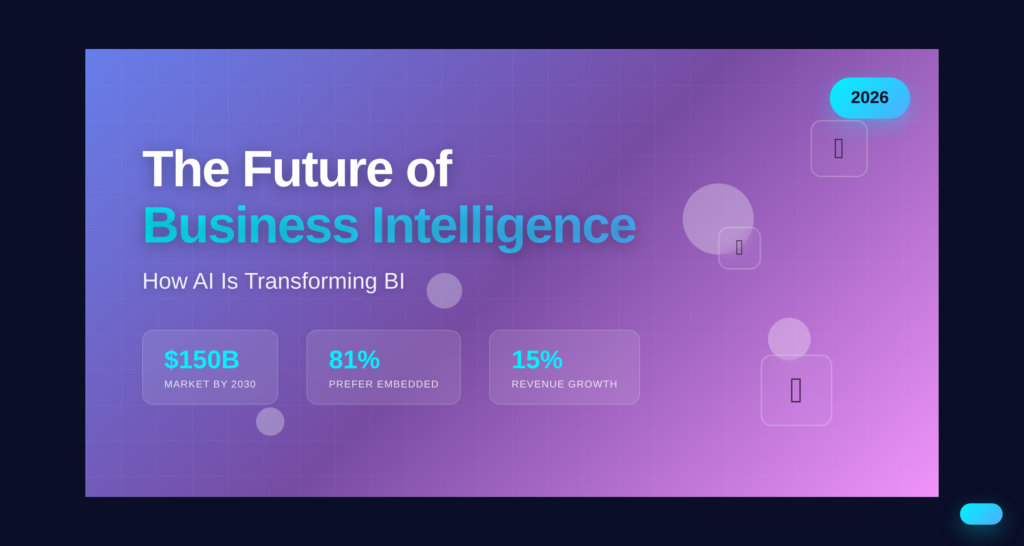
The landscape of Business Intelligence (BI) is undergoing a fundamental transformation, moving beyond its historical mandate of retrospective reporting toward a dynamic system of proactive Decision Intelligence. Traditional BI platforms have long utilized technological frameworks to analyze and present operational data, focusing primarily on descriptive and diagnostic reporting—the function of understanding what happened within a business.1 Today, Artificial Intelligence (AI) introduces a disruptive layer, leveraging algorithms and machine learning to simulate human cognition, driving a core focus on predictive analytics and future-forward outcomes.1
AI Pulse Weekly: New Eyes, New Minds The Week AI Got Personal

AI Pulse Weekly: New Eyes, New Minds The Week AI Got Personal

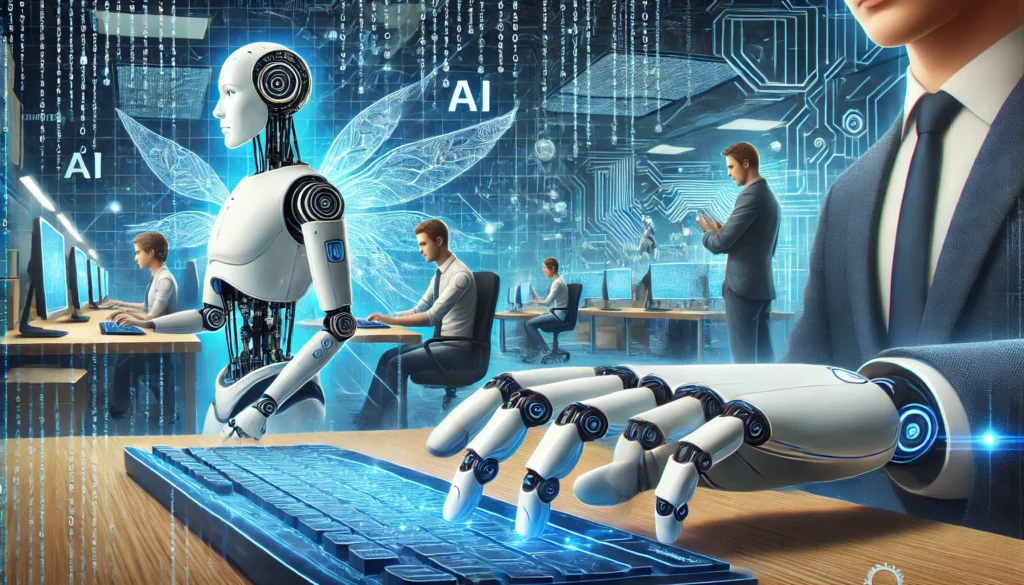
This week, something important happened in the world of AI: it started to feel more personal Exclusively on AI Pulse Weekly. AI tools are no longer just answering questions or writing emails—they’re starting to understand us better, adapt to our needs, and fit into our daily lives in more meaningful ways. In this issue of AI Pulse Weekly, we explore the biggest updates from companies like Google, Meta, and OpenAI. Google is using its new Gemini AI to teach languages and challenge Duolingo. Meta has launched its own AI app to compete with tools like ChatGPT. Meanwhile, Sam Altman is rolling out eye-scanning ID tech that could change the way we prove who we are. We also look at how specialist AI tools—focused on one job—and generalist AIs—like ChatGPT—are taking different paths. Some tools are now combining both approaches to create smarter, more helpful assistants.
AI Revolution: Top Jobs in Danger and How to Stay Ahead

AI Revolution: Top Jobs in Danger and How to Stay Ahead

AI Revolution: Is Your Job Safe? let's discuss. AI is changing everything—and fast. A few years ago, tasks like writing, designing, and even coding needed human effort. Now? AI can do them in seconds. That’s why so many white-collar jobs are at risk due to AI. But before you start worrying, let’s be real—this isn’t the first time technology has changed jobs. The future of work with AI isn’t about losing everything. It’s about learning how to stay ahead. Some jobs will disappear, yes, but new ones will pop up too. So, what should you do? Don’t panic. I’m going to walk you through exactly which jobs are at risk, why AI is replacing them, and how you can make sure you’re not left behind. Let’s get into it.
China vs. USA: The Race for AI Supremacy and Where India Stands

China vs. USA: The Race for AI Supremacy and Where India Stands

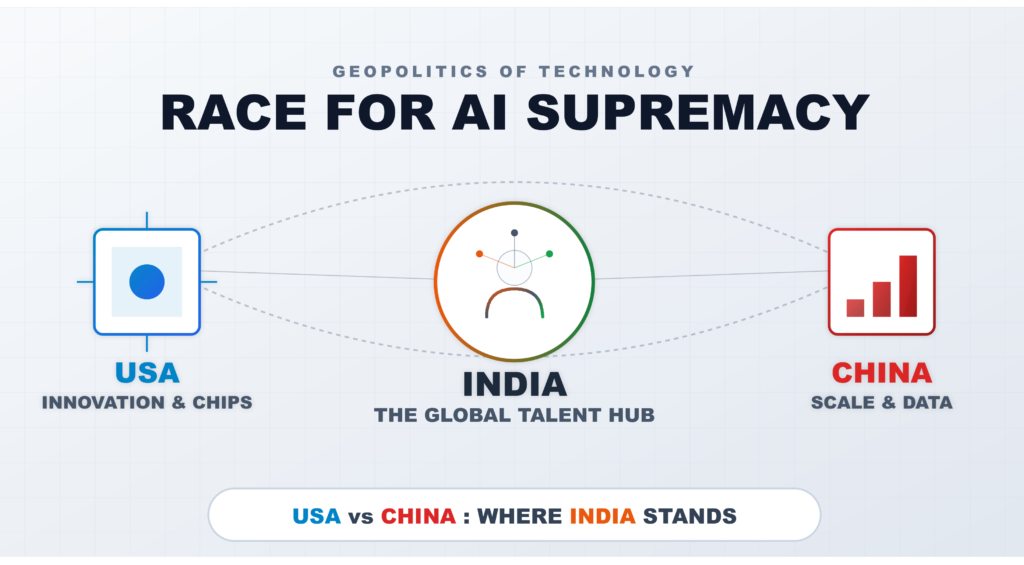
Artificial Intelligence (AI) is changing the world. Countries that lead in AI will shape the future of technology, economy, and security. Right now, the biggest competition is between China and the USA. Both nations are investing billions in AI research, building powerful AI models, and racing to dominate industries like healthcare, finance, and defense. This is more than a technology battle. AI supremacy means global power. The leader in AI will control the economy, military, and digital world. The USA leads with Google, OpenAI, and Microsoft. But China is closing the gap with state-backed AI and tech giants like Baidu and Alibaba. But what about India? With a growing tech industry and top AI talent, can India compete with these superpowers? Or will it play a different role in this AI race? Let’s explore where India stands in The Race for AI Supremacy.