Python Optimization Guide: How to Write Faster, Smarter Code

Python Optimization Guide: How to Write Faster, Smarter Code

After debugging production systems that process millions of records daily and optimizing research pipelines that run for hours, I've noticed a pattern: most optimization in Python advice focuses on tricks that save microseconds while ignoring fundamental issues that cost actual time. The typical tutorial shows you that list comprehensions are faster than loops, then moves on. But that doesn't answer the questions that matter: Why is your specific Python code slow? Which optimization will actually help? When should you stop optimizing and ship the code? This guide explains optimization in Python from a systems-level perspective, focusing on real-world performance bottlenecks, data structures, memory behavior, and execution models. We'll examine what the interpreter actually does, where bottlenecks emerge in real applications, and how to make informed decisions about performance improvements. The goal isn't memorizing techniques — it's developing intuition for why Python code behaves the way it does.
Python String Comparison Tutorial: Complete Guide

Python String Comparison Tutorial: Complete Guide

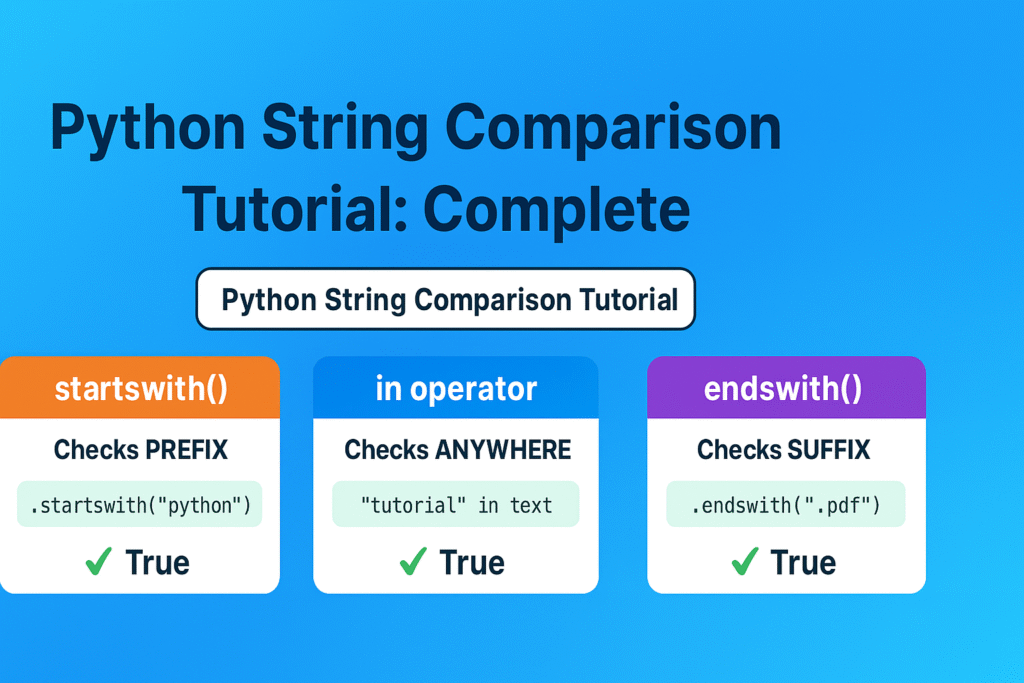
When writing Python code, you often need to compare strings — whether it’s checking usernames, validating user input, or organizing data. String comparison is much like checking if two words are identical or deciding which one would appear first in a dictionary. Python compares strings using Unicode values. Each character has a number (like 'A' = 65, 'a' = 97). When Python compares strings, it checks these numbers from left to right.
Mastering AWS Lambda with Boto3 and Python: A Complete Step-by-Step Tutorial

Mastering AWS Lambda with Boto3 and Python: A Complete Step-by-Step Tutorial

AWS Lambda is one of the easiest ways to build serverless applications on AWS. You don’t need to set up or maintain servers — AWS does it for you. In this tutorial, we’ll start simple and build our way up. This tutorial walks you through everything — writing your first Lambda function, deploying it, automating it with Boto3, and working with advanced features like environment variables and triggers. Let’s get started.
Master Python String Formatting: Complete Guide

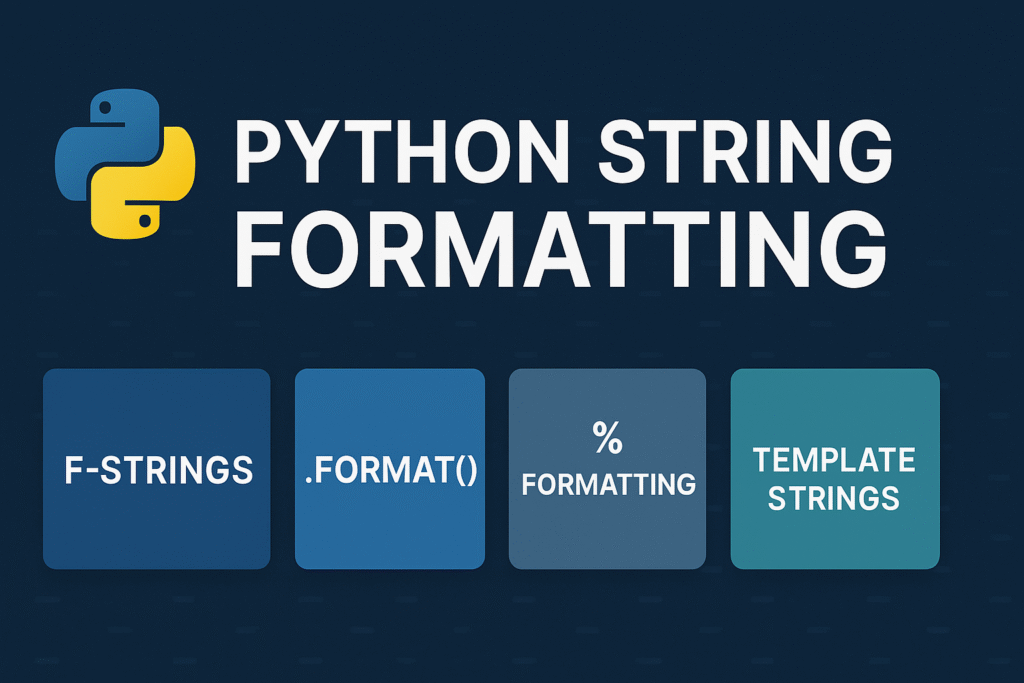
Master Python String Formatting: Complete Guide

String formatting is also commonly referred to as formatted string construction. It is the process of creating a string that includes variable data by embedding values within a predefined string structure or pattern. It enables the dynamic composition of strings without the need to concatenate values manually. If you want to print someone’s name and age. You could do it like this:
Escape Sequences and Raw Strings in Python: The Complete Guide

Escape Sequences and Raw Strings in Python: The Complete Guide

When you start writing Python programs, working with text can confuse you. Strings seem simple at first. You put text between quotes and it works. But then weird things happen. Your file paths break. Your text shows up on different lines when you don’t want it to. Quote marks disappear from your output. These problems happen because Python treats certain characters in special ways. Python sees backslash characters (\) as instructions. When Python finds \n in your text, it creates a new line. When it finds \t, it adds a tab space. These are called escape sequences in Python.
Prime Factorization Algorithm in Python

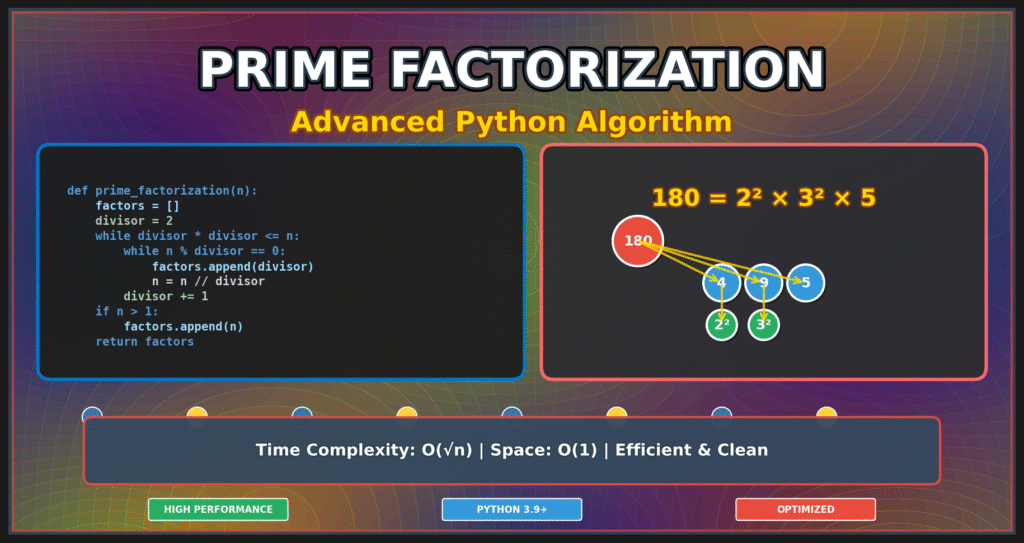
Prime Factorization Algorithm in Python

Want to see how prime factorization works in real time? Use our interactive Prime Factorization Web App below. Just enter any number, and the tool will instantly break it down into its prime factors. This is a great way to test the algorithms we discussed above and explore more examples on your own.