How to Get the First Digit of a Number in Python

How to Get the First Digit of a Number in Python

If I give you the number 54321, what’s the first digit? Obviously, it’s 5. But what if I give you -0.00789? The first digit is actually 7. Here’s what’s wild – this simple concept can catch criminals, verify scientific research, and spot fake tax returns. When people make up numbers, they don’t follow the same patterns that occur naturally. Real data has specific fingerprints. Fake data looks different. Learning to extract first digits lets you detect these differences. I’ll show you four different ways to get that first digit in Python. Each method solves different problems. By the end, you’ll know which one to use when.
How to Return Multiple Values from a Function in Python

How to Return Multiple Values from a Function in Python

Python programming frequently requires functions that return multiple values simultaneously. This powerful feature allows developers to create efficient functions that provide comprehensive results in a single operation. Instead of calling separate functions for related data, Python multiple return values enable streamlined code execution and improved program performance. Understanding when and how to implement multiple return values becomes essential for writing professional Python applications.
Parameter Passing Techniques in Python: A Complete Guide

Parameter Passing Techniques in Python: A Complete Guide

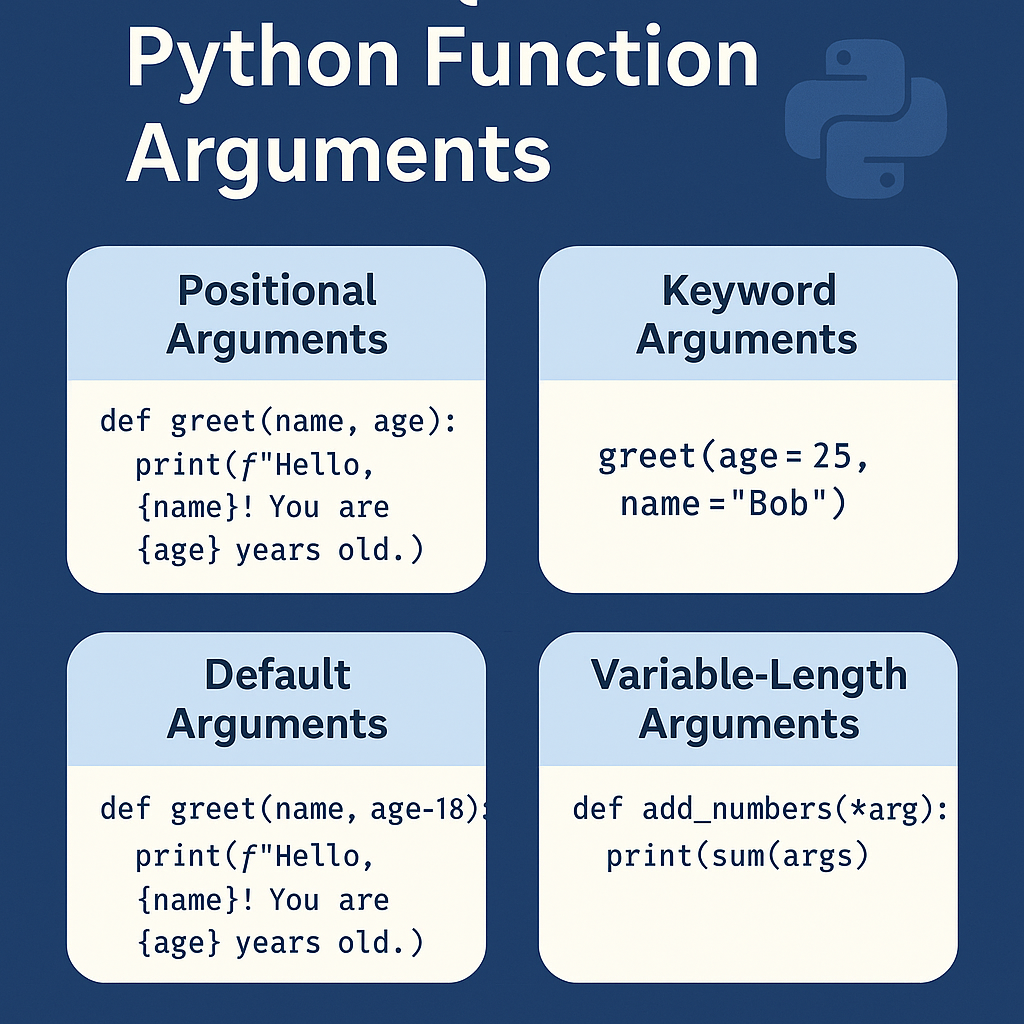
Function parameters are placeholders for data in Python functions. Think of them as empty containers waiting for information. When you create a function, you define these containers. When you call the function, you provide the actual data. Python function arguments are the real values you pass to functions. The difference between parameters and arguments confuses many beginners. Parameters exist in the function definition. Arguments are what you actually send to the function when calling it. Understanding this difference helps you write better Python code. It also makes debugging easier when things go wrong. Professional Python developers always know this distinction.
How to Create and Use Functions in Python

How to Create and Use Functions in Python

Just Consider Python functions as mini-programs inside your main program. Just like you have different tools in a toolbox, functions are coding tools that help you organize and reuse your code efficiently. Before we start building Python functions, let me explain why they are crucial for programming success. When you write code without functions, you repeat the same instructions multiple times. This makes your Python code long, hard to read, and difficult to debug when problems occur. Python functions solve this problem by letting you write code once and use it many times throughout your program. This concept is fundamental to defining and calling functions in Python, which forms the backbone of efficient programming and software development.
Find All Divisors of a Number in Python

Find All Divisors of a Number in Python

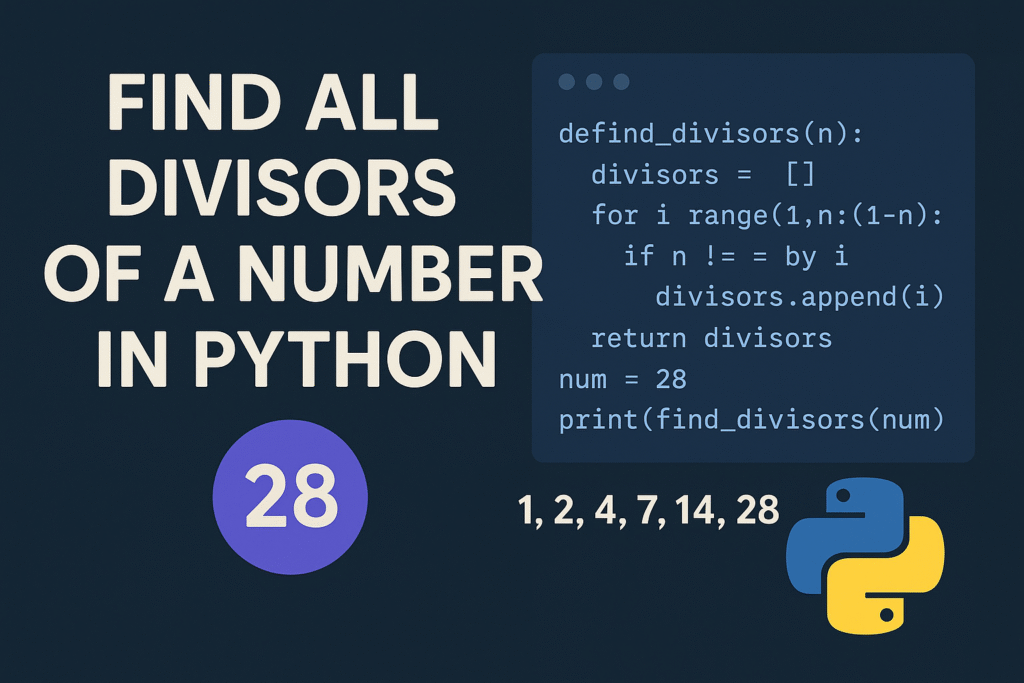
A divisor is a number that splits another number evenly. No pieces left over. Imagine you have 12 cookies. You want to share them equally with friends. How many friends can get the same amount? Those numbers are divisors of 12. Example: 12 cookies can be shared equally among 1, 2, 3, 4, 6, or 12 friends. These numbers are divisors of 12. Divisors help solve real problems. You use them in data analysis with pandas to group information. They work with Python sets to find common factors between numbers. Today you will master three ways to find divisors in Python. Each method is smarter than the last. Each method saves you time and effort. You will discover why some methods check every number. Others skip most numbers and still find the answer. The smartest method uses math tricks that work like magic.
How to check a prime number in Python

How to check a prime number in Python

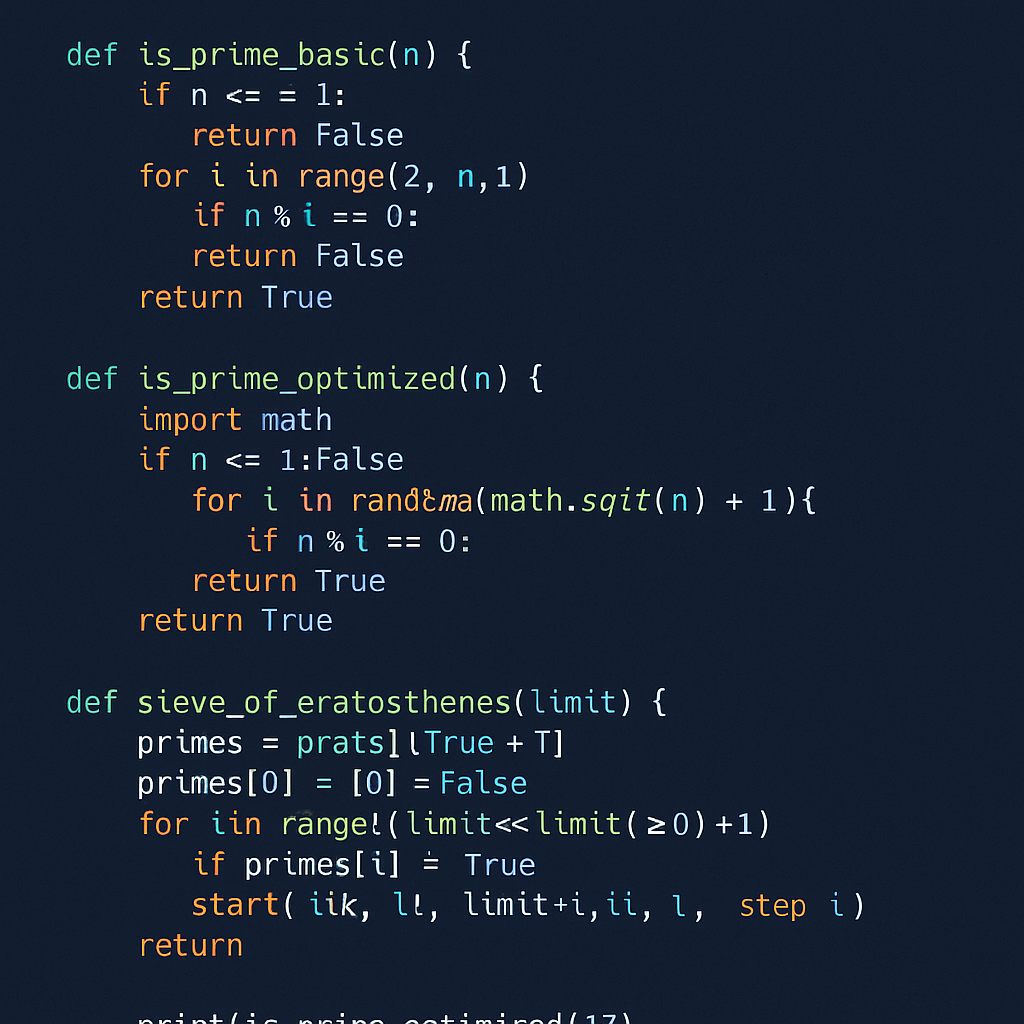
A prime number is like a special club member in math. Think of it this way. Every number has friends who can divide it evenly. These friends are called “factors”. A prime number is very picky. It only has two friends: the number 1 and itself. Let me show you what this means with simple examples.
How to Write a Python Program to Find LCM

How to Write a Python Program to Find LCM

Finding the Least Common Multiple (LCM) is a fundamental mathematical operation that every Python programmer should master. Whether you’re preparing for coding interviews, competitive programming contests, or building real-world applications, understanding LCM calculation methods will give you a significant advantage. In this comprehensive tutorial, we’ll explore four different methods to calculate LCM in Python, each with its own benefits and use cases. You’ll also get hands-on practice with our interactive calculator and test your knowledge with a challenging quiz.