Type Conversion in Python: The Ultimate Guide

Type Conversion in Python: The Ultimate Guide

When writing Python programs, you often need to convert one data type into another. This is called type conversion. For example, you might have a number stored as a string, but you need it as an integer for calculations. Python makes type conversion easy with built-in functions. In this guide, we’ll explore how to convert data types in Python with simple examples. You’ll learn: What type conversion is and why it's important The difference between implicit and explicit type conversion How to use Python's built-in functions for conversion By the end of this
Mutable vs Immutable in Python

Mutable vs Immutable in Python

When you write Python code, you deal with different types of data—numbers, lists, strings, dictionaries, and more. Some of these can be changed (mutable), while others stay the same (immutable) once created. Understanding this difference is super important. Because it affects how your code works, how fast it runs, and how Python handles memory. If you’ve ever wondered why lists behave differently from tuples or why some objects seem to change unexpectedly, you’re not alone! In this guide, we’ll break down mutable vs immutable in Python in the simplest way possible. By the end, you’ll know exactly when to use which type and how this knowledge can help you write better, more efficient code.
Python type() Function: The Simple Trick to Checking Data Types

Python type() Function: The Simple Trick to Checking Data Types

Ever run into a TypeError in Python and thought, Wait... what just happened? Don't worry, we've all been there! The type() function is like a quick detective—it tells you exactly what kind of data you're working with so you can avoid those annoying surprises. Why Should You Care About Data Types? Python is dynamically typed, meaning you don’t have to declare variable types. Sounds great, right? Well… it also means Python won’t stop you from accidentally mixing things up. Here’s where checking data types saves the day:
Python id() Function Explained: How Memory Addressing Works

Python id() Function Explained: How Memory Addressing Works

Ever wondered how Python keeps track of the variables you create? That’s where Python’s id() function comes in. It gives you a unique number for each object, showing where Python stores it in memory. Python manages memory automatically, but every object you create has a specific place in memory. Knowing an object’s identity (its memory address) can be helpful when working with mutable vs. immutable data types, debugging tricky issues, or just exploring how Python handles data behind the scenes. With id(), you can: See where an object lives in memory. Check if two variables point to the same object or just have the same value. Get a deeper understanding of how Python stores and reuses data. Let’s break it down!
How to Swap Two Variables Without Using a Third in Python – Explained

How to Swap Two Variables Without Using a Third in Python – Explained

Swapping two variables is something you’ll do often in programming. Maybe you’re sorting numbers, swapping player turns in a game, or just switching values for some logic to work. The traditional way to swap two variables is by using a third (temporary) variable. You store one value in the temporary variable, move the second value to the first, and then assign the stored value back to the second. It works, but there’s a cleaner way! In Python, you can swap two variables without needing a third one. This method is not only shorter but also makes your code easier to read and understand. Plus, Python’s way of swapping is optimized, so it can be slightly faster than the traditional approach in some cases. Let’s see how it works!
Python Naming Conventions for Developers: A Complete Cheat Sheet

Python Naming Conventions for Developers: A Complete Cheat Sheet

Let's talk about something simple but crucial in Python—Python naming conventions. Why does this matter? Because clear, consistent names make your code easier to read, understand, and maintain. When variables and functions have meaningful names, you (and others) can quickly grasp what the code is doing. But if names are inconsistent or vague, the code becomes a frustrating puzzle to decipher. Python follows an official style guide called PEP 8, which lays out clear rules for naming things properly. Sticking to these guidelines makes your code look professional, polished, and team-friendly—whether you’re working alone or as part of a team.
Python Terminology Cheat Sheet for Interviews – An Ultimate Guide

Python Terminology Cheat Sheet for Interviews – An Ultimate Guide

Preparing for a Python interview can feel stressful, especially when you run into tricky technical terms. But don’t worry—I’ve got you! Here is the Python Terminology Cheat Sheet. This Python terminology cheat sheet covers the most important terms you’ll need. You’ll go through data types, loops, functions, OOP, exception handling, and more. Whether you're just starting or brushing up, this guide will make things simple. Knowing these terms will help you explain your answers better and feel more confident. Let’s get started!
Python Execution Flow: What Happens When You Hit ‘Run’?

Python Execution Flow: What Happens When You Hit ‘Run’?

Ever wonder what really happens when you run a Python script? You write some code, hit Run, and—boom—it works (or throws an error). But behind the scenes, Python goes through a whole process to make that happen. In this post, I’ll walk you through Python’s execution step by step. You’ll see how Python reads your code, runs it, handles variables and functions, and why some errors only show up when you actually run the script. By the end, you’ll understand what’s going on behind the scenes, so you can debug problems faster and write better code.
Python Implementations Compared: Which One Runs Your Code Faster?

Python Implementations Compared: Which One Runs Your Code Faster?

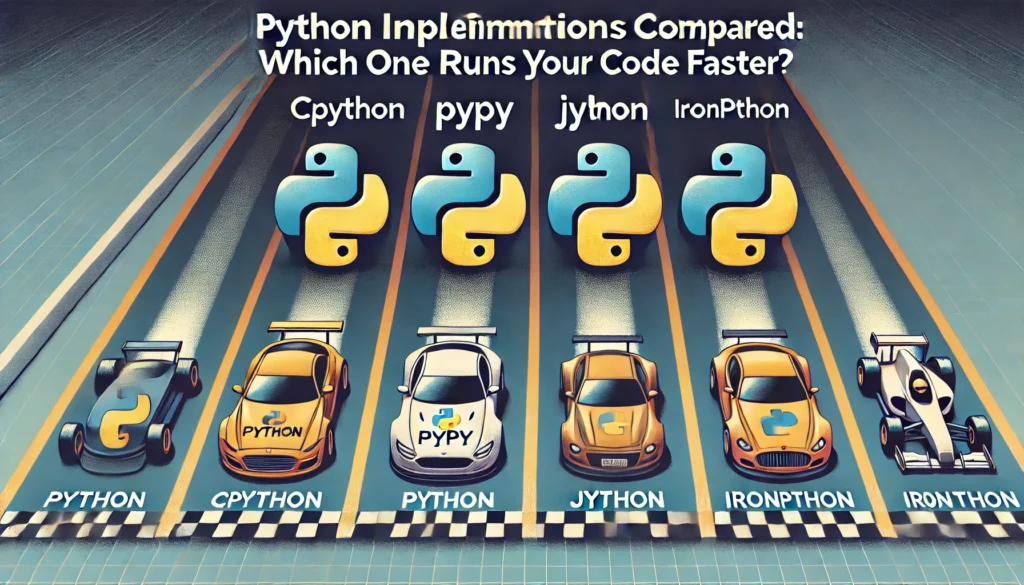
When you write Python code, you probably just run it without thinking about how it runs. But did you know there are different ways to run Python? These are called Python implementations, and they can make a big difference in speed, memory use, and compatibility. Most people use CPython, which is the default Python implementation. But there are others, like PyPy, Jython, IronPython, and MicroPython. Some run Python faster, some use less memory, and some work better with specific tools. In this post, I'll walk you through the most popular Python implementations, compare their performance, and help you decide which one is best for your needs. If you've ever wondered, "Which Python version runs my code the fastest?", you're in the right place. Let’s get started!