Why DeepSeek AI Breakthrough Is a Wake-Up Call for Silicon Valley

Why DeepSeek AI Breakthrough Is a Wake-Up Call for Silicon Valley

Artificial Intelligence (AI) is changing the way we live and work. Every day, tech giants in Silicon Valley race to develop smarter, faster, and more efficient AI tools. But recently, a lesser-known player, DeepSeek, has caught everyone’s attention with a breakthrough that’s turning heads across the industry. DeepSeek’s innovation isn’t just about new technology — it’s a game-changer that challenges the big players to rethink their strategies. From smarter algorithms to more accurate predictions, DeepSeek's AI solutions have set a new benchmark. This shift has sparked debates, raised eyebrows, and even led some companies to question their current AI investments.
LLaSA-3B: The Next Evolution in Text-to-Speech Technology

LLaSA-3B: The Next Evolution in Text-to-Speech Technology

Artificial intelligence is growing fast, and text-to-speech (TTS) technology has come a long way. It started with robotic voices that sounded flat and monotone. Now, TTS voices sound much more natural. This change has been truly impressive. Now, there’s LLaSA-3B—a new TTS model that takes things to the next level. It’s built on Llama 3.2B, a powerful AI system. But LLaSA-3B isn’t just another TTS model. It brings ultra-realistic audio that sounds almost human. It can express emotions more naturally and supports many languages. In this post, we’ll talk about why LLaSA-3B is so special. It’s more than just a tool—it could change how we use voice technology in the future.
How to Get Started with LightRAG: The Simple, Fast Alternative to GraphRAG

How to Get Started with LightRAG: The Simple, Fast Alternative to GraphRAG

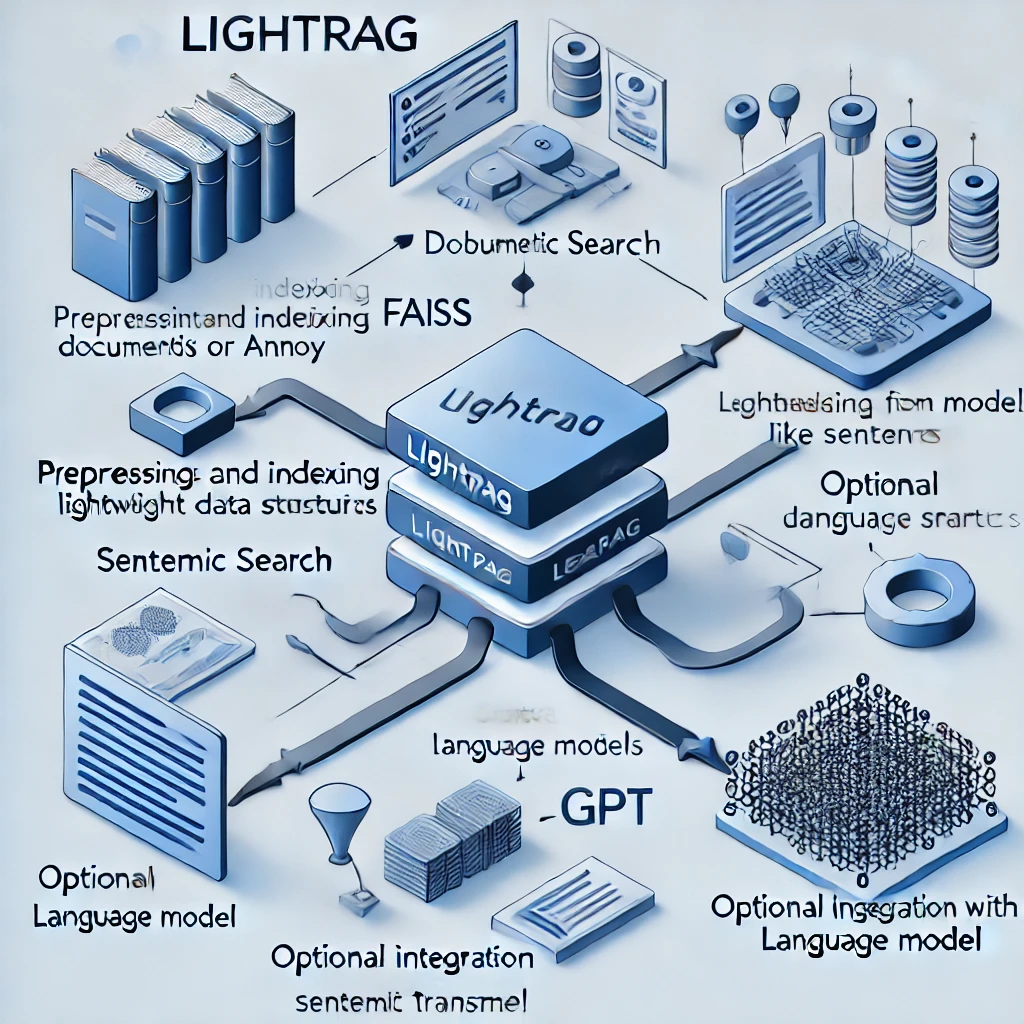
Building tools for retrieval-augmented generation (RAG) can be tricky, especially when the process is too complex or resource-heavy. Many people rely on GraphRAG, which is powerful but difficult to manage. Its complexity and high demands often discourage developers from using it. That’s why LightRAG was created. It is a faster, simpler, and more efficient alternative. LightRAG focuses on making RAG workflows simple while still delivering excellent results. You don’t need to deal with complicated setups or worry about excessive resource usage.
Discover the Power of Feature Engineering in Machine Learning

Discover the Power of Feature Engineering in Machine Learning

In the fast-changing world of machine learning (ML), building accurate models is always a top priority. While algorithms like neural networks, decision trees, and support vector machines often grab all the attention, there’s another critical piece that doesn’t get enough recognition: feature engineering. Feature engineering is the process of taking raw data and transforming it into useful inputs—called features—that machine learning models can understand and learn from. It’s what makes the difference between a model that struggles and one that performs exceptionally well. It's just like preparing ingredients for a recipe. If the ingredients are carefully chosen and prepared, the final dish will likely turn out better.
How to Build a Portfolio for AI and Data Science Jobs in 2025

How to Build a Portfolio for AI and Data Science Jobs in 2025

Portfolio for AI and Data Science: In today’s competitive job market, having a strong portfolio is one of the best ways to stand out when applying for AI and data science roles. Employers are no longer just looking for degrees or certifications. They want to see proof of your skills in action. A well-crafted portfolio shows that you can solve real-world problems, work with data, and build practical solutions using tools like Python, machine learning, and data analysis.
Top 6 Regression Techniques you should know

Top 6 Regression Techniques you should know

Regression is one of the most important tools in machine learning. It’s used to predict numbers, like estimating house prices, forecasting stock trends, or analyzing customer behavior. Simply put, regression helps us understand the relationship between different variables and make accurate predictions. In this blog post, we’ll explore the top 10 regression techniques you need to know in 2025. These techniques are powerful tools for solving a range of problems, from simple predictions to more complex scenarios involving large datasets.
Edge AI for Real-Time Data Processing

Edge AI for Real-Time Data Processing

Traditional AI relies on cloud servers to process data, which can cause delays and require a constant internet connection. Edge AI changes this by processing data directly on devices, making them faster and more efficient. This is important for devices like smartphones, drones, security cameras, and industrial machines, which need to make quick decisions without waiting for a cloud response.
AI Pulse Weekly: The latest AI trends

AI Pulse Weekly: The latest AI trends

Artificial Intelligence is advancing rapidly. It is now filling data gaps, detecting cyber threats before they happen, and automating complex tasks with minimal human input. This week’s AI Pulse Weekly explores the latest AI trends shaping the future of AI.
Exploratory Data Analysis top 10 Python Libraries: The Ultimate Guide

Exploratory Data Analysis top 10 Python Libraries: The Ultimate Guide

Exploratory Data Analysis (EDA) is a crucial first step in any data science project. It helps us understand the data, find patterns, and spot any issues before building models. By exploring the data, we can identify trends, missing values, and outliers that might affect the final results. EDA can be time-consuming if done manually. However, Python provides powerful libraries that make the process much easier and faster. These libraries allow us to visualize data, clean messy datasets, and generate insights with just a few lines of code.
How to automate data preprocessing in Python

How to automate data preprocessing in Python

Automation in Data Preprocessing means using tools, scripts, or software to clean, organize, and prepare raw data for analysis without requiring much manual intervention. It simplifies repetitive and time-consuming tasks like handling missing values, normalizing data, encoding categories, and detecting outliers. Automation helps make preprocessing faster, more accurate, and scalable for large datasets.